
RF Lifting (Thermage / Ultherapy) in Vietnam: Cost and Comparison
Overview of Thermage
Thermage is a non-invasive skin tightening treatment that uses monopolar radiofrequency energy, most commonly associated with the Thermage FLX system. RF energy is delivered into tissues beneath the skin to produce controlled heating, which can cause existing collagen fibers to contract and stimulate new collagen formation over time.
Thermage is commonly used on the face, around the eyes, jawline, neck and selected areas of the body. Compared with technologies that focus energy at specific deeper tissue levels, Thermage RF distributes heat across a relatively broader treatment zone, making it commonly used for improving skin firmness, texture and mild laxity.
Thermage is not a surgical facelift, and the degree of improvement is generally more subtle than that achieved with surgery. Results vary depending on skin condition, treatment area, device settings and treatment technique.
Overview of Ultherapy
Ultherapy is a non-invasive lifting treatment that uses microfocused ultrasound combined with real-time ultrasound imaging. The system can deliver energy at specific tissue depths, including approximately 1.5 mm, 3.0 mm and 4.5 mm, creating controlled thermal coagulation points that stimulate collagen and elastin remodeling.
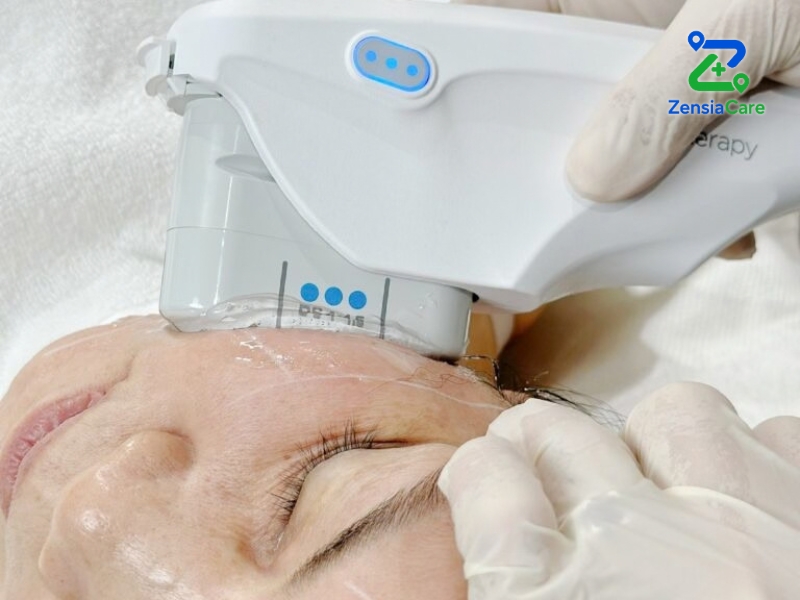
Ultherapy is FDA-cleared for lifting the brow, neck and under-chin area, as well as improving lines and wrinkles on the décolleté. Ultherapy PRIME continues to use microfocused ultrasound with real-time visualization to help practitioners identify the appropriate treatment depth.
Because energy can be focused at defined tissue levels, Ultherapy is often considered when the main goal is to improve laxity and provide a lifting effect in areas such as the jawline, under the chin and neck. Results generally develop gradually over the months following treatment as collagen remodeling progresses.
Summary of the Differences Between Thermage and Ultherapy
| Thermage | Ultherapy | |
|---|---|---|
| Energy type | Monopolar radiofrequency (RF) | Microfocused ultrasound |
| How it works | Produces controlled heating across a relatively broad tissue area | Creates thermal coagulation points at specific tissue depths |
| Treatment depth | Depends on treatment tip, area and settings | Commonly 1.5 mm, 3.0 mm and 4.5 mm |
| Common goals | Skin tightening, texture improvement, mild laxity | Tissue lifting, jawline definition, under-chin and neck tightening |
| Common areas | Face, eyes, neck and selected body areas | Brow, lower face, under chin, neck and décolleté |
| Number of sessions | Often performed as a single treatment course | Often one treatment session per treatment plan, depending on the case |
| Downtime | Usually limited | Usually limited |
| Key consideration | Confirm genuine Thermage device, tip and shot count | Confirm genuine Ultherapy device and proposed line/shot count |
In summary, Thermage uses RF energy to heat tissue across a relatively broad area and improve skin firmness, while Ultherapy uses focused ultrasound to deliver energy to specific tissue depths. These are different technologies, and the more appropriate option depends on the patient’s skin condition and treatment goals.
Cost of Thermage and Ultherapy in Vietnam
| Treatment | Vietnam | United States |
|---|---|---|
| Thermage FLX – face | Approx. $1,300–1,700+ | Approx. $1,500–7,900 |
| Thermage FLX – face + eyes / larger areas | Approx. $2,000–3,500+ | Varies by treatment area and provider |
| Ultherapy – small area / 100 shots | Approx. $200–270 | Varies by treatment area and provider |
| Ultherapy – face | Approx. $850–1,900+ | Approx. $1,000–5,000 |
| Ultherapy – face + neck | Approx. $1,400–2,800+ | Depends on treatment scope |
These prices should be treated as general references only. Two clinics may both advertise “Thermage” or “Ultherapy” while using different shot counts, line counts, treatment tips, areas or device versions, which can substantially affect the final price.
Thermage and Ultherapy pricing is influenced primarily by the treatment area and the amount of energy delivered, often reflected in the number of shots or lines used. Treating a smaller area such as around the eyes, under the chin or along the jawline is generally less expensive than treating the full face or combining the face and neck. With Thermage, treatment tip and shot count are important pricing factors, while with Ultherapy, the number of lines or shots and the treatment depths selected can directly affect cost.
Prices may also vary according to the device version, practitioner experience, consultation fees and services included in the package. For this reason, international patients should compare quotations based on the same treatment area and similar shot or line counts rather than relying only on the commercial treatment name.
Pre-Treatment Considerations for Thermage and Ultherapy in Vietnam
Before undergoing Thermage or Ultherapy in Vietnam, patients should confirm that the facility is appropriately licensed and that the practitioner assessing or performing the procedure has relevant qualifications. With energy-based aesthetic technologies, accurate assessment of skin condition, degree of laxity and treatment area is important when selecting appropriate settings.
Patients should also ask which device and version will be used, the proposed treatment area, expected number of shots or lines and what is included in the quotation. For Thermage FLX, it may be helpful to confirm the treatment tip and shot count; for Ultherapy, patients should verify the device and proposed line or shot count. This makes comparisons between providers more meaningful and reduces the risk of comparing prices for significantly different treatment scopes.
Thermage and Ultherapy Treatment Process
A typical Thermage or Ultherapy session begins with consultation and assessment of skin laxity, facial contours, treatment goals and relevant aesthetic history. The treatment area is then cleansed and may be marked before treatment. Depending on the procedure, the clinic may use measures to help reduce discomfort.
With Thermage, the RF treatment tip is moved across the skin to deliver controlled energy into the tissue. With Ultherapy, real-time ultrasound imaging may be used to visualize tissue layers before energy is delivered at selected depths. After treatment, patients are typically given instructions on skin care and any symptoms that should be monitored during the initial recovery period.
Recovery and Aftercare Following Thermage or Ultherapy
Thermage and Ultherapy usually do not require prolonged downtime. Some patients may experience temporary redness, warmth, tenderness or mild swelling following treatment. With Ultherapy, some patients may also notice temporary tenderness when touching the treated area.
Most patients can return to normal daily activities relatively soon after treatment, although they should follow the provider’s recommendations regarding skincare, sun protection, physical activity and the use of potentially irritating products. Persistent pain, increasing swelling, altered sensation or other unexpected symptoms should be assessed by the treating provider.
Expected Timeline for Thermage and Ultherapy Results
Thermage may produce an initial sensation of tighter skin due to immediate collagen contraction, while collagen remodeling and new collagen formation continue over the following months. Changes are generally gradual and should not be expected to replicate the results of a surgical facelift.
With Ultherapy, results typically develop gradually over approximately two to three months and may continue to improve for up to around six months as collagen remodeling progresses. The manufacturer states that facial results may last for about one year or longer in some patients, although the actual duration varies between individuals.
Recommended Number of Thermage and Ultherapy Sessions
Both Thermage and Ultherapy are commonly designed to produce results from a single treatment course rather than requiring multiple closely spaced sessions like some other aesthetic technologies. However, the need for repeat treatment in the future depends on age, degree of skin laxity, collagen response and individual aesthetic goals.
For international patients, this can make treatment easier to incorporate into a relatively short stay in Vietnam. Patients should still clarify follow-up arrangements and whether further assessment is recommended after returning home.
Combining Thermage or Ultherapy With Other Procedures
Thermage and Ultherapy may be incorporated into broader aesthetic treatment plans alongside botulinum toxin, dermal fillers, skin boosters, laser treatments or other procedures. However, combining multiple treatments does not necessarily mean that all procedures should be performed on the same day.
The sequence and interval between treatments should be planned according to the treatment goals, target areas and individual skin condition. Patients should disclose any recent aesthetic procedures so that the treating practitioner can determine an appropriate treatment sequence.
How ZensiaCare Supports International Patients
Comparing Thermage and Ultherapy treatment options in another country can be challenging because clinics may use different devices, treatment areas, shot or line counts, package structures and quotation formats. International patients may also need to coordinate consultations, treatment schedules, interpretation, local transportation and follow-up arrangements during their stay in Vietnam.
ZensiaCare is Vietnam’s first dedicated medical concierge service for international patients. Our Case Managers help patients understand available treatment options, connect with suitable dermatology and aesthetic medical providers, coordinate consultations and appointments, obtain and clarify preliminary quotations, arrange language support, and assist with practical arrangements such as airport transfers, local transportation and accommodation.
For Thermage and Ultherapy in particular, ZensiaCare can help patients clarify important quotation details such as the treatment area, device version, estimated number of shots or lines, and services included in the proposed package. This can make it easier to compare providers on a more consistent basis rather than relying only on the headline price.
For patients combining treatment with travel, our Case Managers can also help coordinate treatment timing, follow-up visits and local logistics during their stay in Vietnam. All examinations, clinical assessments, treatment recommendations and medical decisions remain the responsibility of licensed healthcare professionals and healthcare facilities.
If you are considering Thermage or Ultherapy in Vietnam and would like to understand the likely treatment cost for your individual needs, ZensiaCare can help coordinate preliminary information and quotations before you make your travel arrangements.
ZensiaCare – Your Trusted Medical Concierge in Vietnam.
Pricing references: Publicly available price lists from Vinmec and Aura Clinic in Vietnam, with U.S. pricing data referenced from RealSelf.