
IVF and ICSI in Vietnam: Cost, Process, and What to Expect
Written by Dr. Quy Nguyen
Differences Between IVF and ICSI in Fertility Treatment
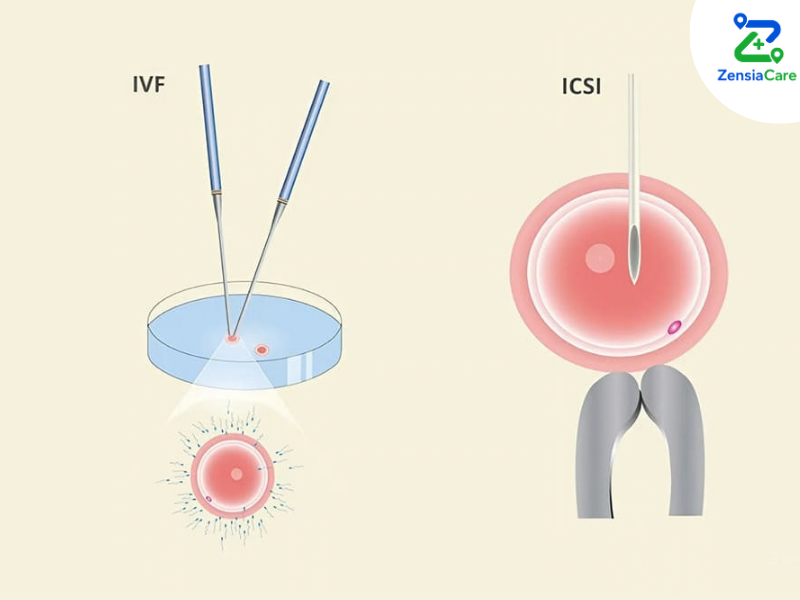
IVF refers to the overall process of in vitro fertilization, while ICSI is a laboratory fertilization technique used within some IVF cycles.
| Factor | Conventional IVF | IVF with ICSI |
|---|---|---|
| Fertilization method | Eggs and sperm are placed together in the laboratory | A single sperm is injected directly into the egg |
| Common indications | Depends on the cause of infertility and physician assessment | Often used for male-factor infertility, previous poor fertilization, or selected clinical situations |
| Cost | Lower when ICSI is not required | May be higher because ICSI is added to the IVF cycle |
| Outcomes | Depend on age, egg quality, sperm quality, and embryo development | ICSI does not guarantee a higher live birth rate in every case |
ASRM noted in 2026 that ICSI may be useful in selected situations, including male-factor infertility, previous fertilization failure, and some cycles involving frozen oocytes. However, routine use of ICSI in patients without male-factor infertility has not been shown to improve live birth rates.
Treatment Costs for Assisted Reproductive Care in Vietnam
The cost of IVF and ICSI in Vietnam varies depending on the treatment protocol, number of cycles, medications used, and any additional assisted reproductive techniques. Some fertility centers include ICSI within an IVF package, while others charge separately for procedures such as egg retrieval, embryo culture, embryo transfer, embryo freezing, or genetic testing.
Compared with the United States, treatment costs in Vietnam are generally lower, although packages may differ in what they include. The table below provides a reference comparison for several common cost categories.
| Item | Vietnam | United States |
|---|---|---|
| Basic IVF | Approx. USD 2,800–6,000 | Base cycle approx. USD 8,950; total out-of-pocket cost is often higher |
| IVF + ICSI | Approx. USD 4,200–5,500 based on selected market data | Usually higher than standard IVF because ICSI may be charged separately |
| ICSI as a separate service | Varies by provider; IVF 108 publishes a rate of approximately US$650 | Usually charged as an additional IVF service |
| PGT, embryo storage, FET | Usually charged separately | Usually charged separately |
Some fertility centers in Vietnam publish individual charges rather than a single package price. For example, Vinmec Nha Trang lists separate fees for egg retrieval, embryo culture, embryo transfer, and frozen embryo transfer. Patients should therefore confirm exactly which stages are included before comparing prices between providers.
Fertility Treatment Process for International Patients in Vietnam
For international patients, the process often begins before travelling to Vietnam. Patients may submit medical records, previous test results, treatment history, and other relevant information for preliminary review by the fertility center. Depending on the case, the physician may request additional testing or an online consultation before confirming the proposed treatment plan and when the patient should arrive in Vietnam. After arrival, patients usually undergo an in-person consultation, ultrasound, and required laboratory testing before ovarian stimulation begins. This stage commonly lasts around 8–12 days and requires regular monitoring of follicular development. Once the follicles reach an appropriate stage, egg retrieval is performed, while the sperm sample is prepared during the same period.
With conventional IVF, eggs and sperm are placed together in the laboratory. With ICSI, an embryologist selects a single sperm and injects it directly into an egg. The fertilized eggs are then cultured for several days before embryos are transferred to the uterus or frozen for a later cycle, depending on embryo quality, endometrial condition, and the treatment plan. International patients should plan their stay according to the actual protocol. If frozen embryo transfer or additional testing is required, treatment may extend over a longer period or require more than one trip. It is therefore useful to clarify appointment dates, expected length of stay, interpretation needs, accommodation, and follow-up arrangements before travelling.
Explore IVF hospitals in Vietnam.
Potential Benefits of Assisted Reproductive Treatment
IVF can provide an opportunity for pregnancy when simpler fertility treatments are unsuitable or have not been successful. It also allows the clinical team to monitor embryo development, freeze embryos for future use, and combine treatment with additional reproductive techniques when clinically indicated.

ICSI can be particularly useful in selected cases of male-factor infertility or when there is a higher risk of fertilization failure. ASRM notes that ICSI may improve fertilization in patients with previous poor or failed fertilization with conventional IVF. However, ICSI should not be viewed as a universally “more advanced” option. In some patients without male-factor infertility, current evidence does not show that routine ICSI improves live birth rates.
Risks, Limitations, and Clinical Considerations
IVF may involve side effects from ovarian stimulation medication, including bloating, discomfort, mood changes, or reactions at injection sites. One important complication is ovarian hyperstimulation syndrome (OHSS). ASRM reports that severe OHSS occurs in approximately 0.1–2% of IVF pregnancies based on the data it summarizes.
Other potential risks include complications related to egg retrieval, multiple pregnancy if more than one embryo is transferred, ectopic pregnancy, and the possibility that a treatment cycle may not produce a suitable embryo or result in pregnancy.
For ICSI, ASRM notes that some observational studies have reported a slightly higher risk of congenital abnormalities, although it is difficult to separate the effect of the technique itself from underlying male infertility and other parental factors. The use of ICSI without a clear indication should therefore be considered in the context of its potential benefits, additional cost, and available evidence.
ZensiaCare Support for International Patients Seeking Fertility Treatment in Vietnam
For international patients, planning IVF in Vietnam involves several practical and medical coordination steps before treatment begins, including selecting a fertility center, transferring medical records, understanding the proposed protocol, comparing quotations, arranging tests, and planning the length of stay around each stage of the cycle.
ZensiaCare is Vietnam’s first dedicated medical concierge service for international patients. ZensiaCare helps patients connect with suitable fertility centers, coordinate consultations, submit existing medical records or test results, obtain preliminary quotations, and clarify what is included in the proposed treatment plan. For IVF and ICSI, a Case Manager can also assist with appointment and testing coordination, medical document translation, interpretation, communication with the fertility center, airport transfers, local transportation, accommodation, and follow-up or embryo transfer scheduling when required.
In addition to IVF & Fertility, ZensiaCare supports international patients seeking Dental Care, Eye Care, Hair Restoration, Cosmetic Surgery, Dermatology, Comprehensive Health Check-ups, Rehabilitation, and other healthcare services in Vietnam. All fertility assessments, decisions regarding IVF or ICSI, medication prescriptions, egg retrieval, embryo selection, and clinical treatment decisions remain the responsibility of appropriately licensed physicians and fertility centers.
If you are considering IVF or ICSI in Vietnam and are unsure where to begin, contact ZensiaCare for support with provider research, preliminary quotations, medical record coordination, interpretation, and practical arrangements for your treatment journey in Vietnam.
ZensiaCare – Your Trusted Medical Concierge in Vietnam.